

Quick Answer
AI developer tools are reshaping the engineering stack by augmenting code creation, testing, review, debugging, and delivery rather than replacing the engineering judgment behind them. The durable shift is not faster autocomplete; it is a workflow where humans define constraints, verify outputs, and own architectural decisions while AI handles bounded implementation work.
Introduction
AI-powered coding assistants now belong in the stack discussion alongside repositories, CI/CD, observability, and integrated development environments. Teams that treat them as isolated IDE add-ons often get scattered output, uneven review quality, and another subscription without a better delivery system. Teams that attach AI to clear repository conventions, test gates, and ownership models can remove real friction from daily development. The difficult part is preserving the feedback loops that catch a plausible but incorrect change before it reaches production.
Key Takeaways:
AI delivers the most value inside constrained, reviewable engineering workflows.
Code generation shifts senior work toward specification, verification, and architectural judgment.
Tool sprawl grows when teams buy assistants before defining integration and governance rules.
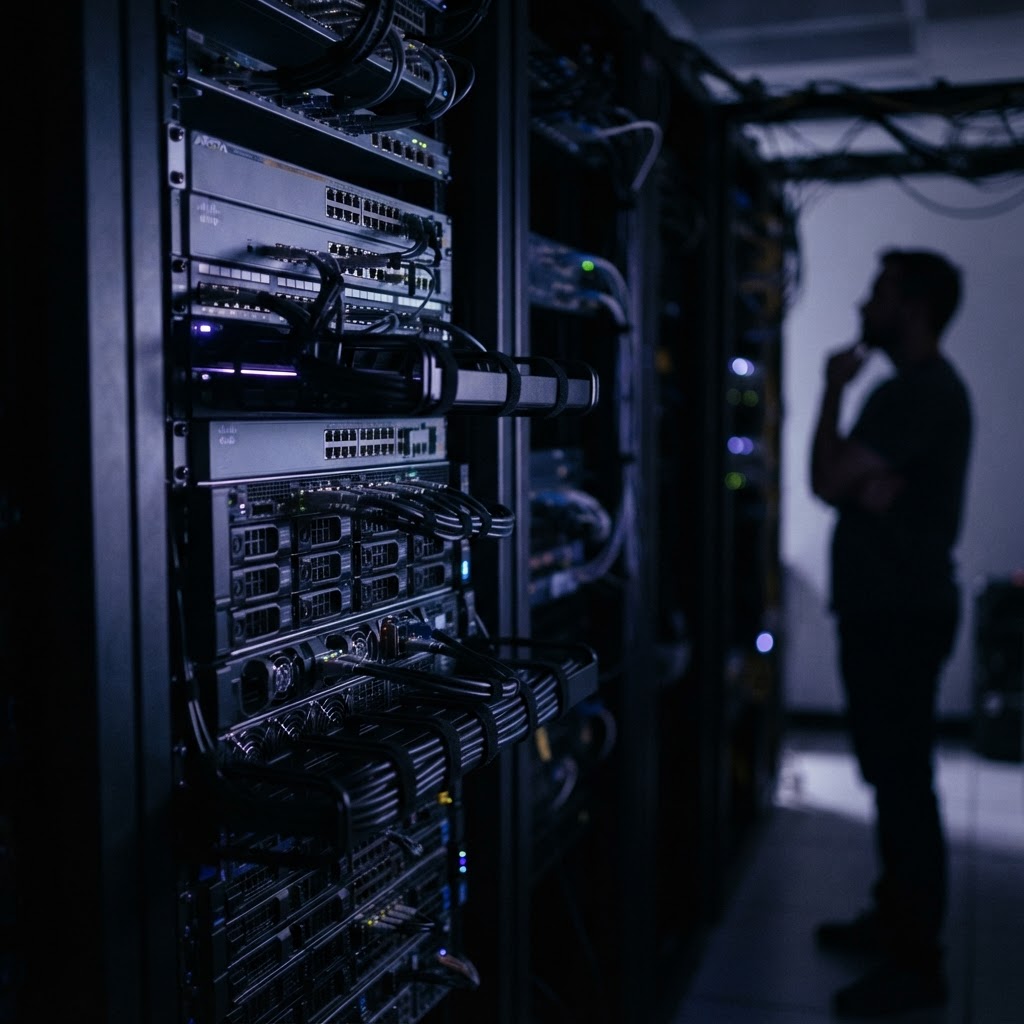
Developer Tools Are Becoming a Coordinated Engineering Layer
The meaningful change in developer tools is orchestration across the delivery path. A coding model can draft a handler, but its practical value depends on whether the repository supplies useful context, tests expose failures, reviewers can inspect intent, and deployment controls prevent unsafe changes from moving forward. That makes AI an architectural concern, not a personal productivity preference.
Where AI-Powered Coding Assistants Change the IDE
AI-powered coding assistants are moving work upstream from typing toward framing the task correctly. A strong prompt in a mature codebase names the interface, constraints, error cases, and validation path; a vague prompt creates code that looks finished while quietly violating local conventions. The better question is not whether an assistant writes code, but whether its output can enter the same disciplined path as human-written code.
Repository context: Ground suggestions in local APIs and conventions.
Task boundaries: Give agents narrow, testable implementation scopes.
Reviewable diffs: Require small changes with explicit intent.
Test ownership: Keep engineers accountable for behavior verification.
Access controls: Limit credentials, production access, and autonomous actions.
Completion Is Not Agentic Delivery
Autocomplete predicts the next local edit; agentic coding workflows can plan, modify multiple files, run commands, and iterate against feedback. Those are different risk profiles. Completion speeds a known implementation, while an agent can amplify a mistaken assumption through tests, configuration, and adjacent services before a human sees the final patch.
Productivity research consistently shows an uneven split by seniority: less-experienced developers tend to see the largest measured gains from AI coding assistants, while senior developers see smaller, more variable gains because their bottleneck is usually judgment and review rather than typing speed, a pattern confirmed in recent developer productivity research. That gap matters because senior engineers still absorb the work of setting standards, resolving ambiguity, and reviewing changes that junior engineers can now produce faster.

Modern Tech Stack Architecture Needs AI at the Control Points
Modern tech stack architecture is not improved by inserting AI into every stage. It improves when AI is placed at control points where input quality, output verification, and rollback are already explicit: pull requests, test failures, incident triage, migration planning, and documentation updates. The stack should make uncertainty visible, not hide it behind a confident natural-language response.
Testing and Debugging Are the First Serious Integration Points
Testing benefits when AI proposes cases from stated contracts, identifies gaps in branch coverage, or converts production symptoms into a focused reproduction plan. It fails when generated tests merely mirror the implementation and bless its mistakes. Teams need automated testing practices that assert observable behavior, plus exploratory testing for unexpected user paths and integration boundaries.
Debugging follows the same rule. AI debugging tools can cluster logs, explain stack traces, and generate hypotheses, but they cannot know which telemetry is incomplete or which business invariant matters most. An engineer should use the model to narrow the search, then verify the causal chain against traces, metrics, source control history, and a reproducible failure.
The comparison below shows why an AI-native stack should be evaluated by operational controls, not by how impressive a demo looks.
Stack layer | Traditional approach | AI-enabled approach | Required control |
|---|---|---|---|
Implementation | Manual editing and search | Context-aware code drafts | Small diffs and human review |
Testing | Handwritten cases and CI runs | Suggested cases and failure analysis | Behavior-based assertions |
Code review | Human comments and checklists | Automated pattern detection | Human ownership of acceptance |
Debugging | Log search and local reproduction | Hypothesis generation from signals | Traceable causal verification |
Delivery | Pipeline rules and release approvals | Assisted release summaries and triage | Protected deployment gates |
The replacement pattern is narrow: AI compresses search, drafting, and classification work, while engineering controls remain the source of truth. That is why AI-native productivity stack decisions should begin with repository discipline and delivery safeguards rather than a vendor shortlist.
CI/CD Should Consume Evidence, Not Prompts
AI-powered CI/CD is useful when it summarizes failed jobs, routes flaky-test investigation, or turns deployment signals into an actionable incident brief. It should not become a path around protected branches, approval policies, or artifact provenance. Accelerated code generation expands the verification surface, which is why generated changes to authentication, deployment scripts, and dependency manifests need the same scrutiny as any other contribution, not less.
Engineering Productivity Tools Must Be Measured at Team Level
Engineering productivity tools should be judged by flow through the team, not by an individual's apparent typing speed. Faster code generation can increase review queues, introduce more ambiguous changes, or create maintenance work if the tool produces patterns nobody understands. The relevant unit is the path from a validated problem statement to a safe, observable production change. Left unmanaged, this is exactly how AI tool sprawl costs accumulate: duplicated workflows, inconsistent review, and weaker standards across a growing set of agent surfaces.
Review Work Is Becoming More Important, Not Less
AI increases the volume of candidate code, which makes review quality a tighter bottleneck. A study of an in-house platform used by 300 engineers over one year reported a 31.8% reduction in pull request review cycle time when code generation was coupled with automated review, as described in automated review capabilities research. The same research notes that 30.7% of reactions to examined AI-related review comments were negative, a useful warning that technically valid feedback can still be poorly timed, noisy, or hard to trust.
Good review systems therefore distinguish mechanical checks from judgment calls. Let automation flag dependency risks, missing tests, duplicated logic, and policy violations. Keep engineers responsible for domain correctness, API contracts, backward compatibility, operational behavior, and whether the change solves the intended product problem.
Hiring Shifts Toward System Judgment
The valuable skill is increasingly the ability to turn an ambiguous request into a bounded engineering problem with explicit acceptance criteria. Senior developers choose their stack by asking whether a tool preserves observability, reproducibility, and ownership under pressure, not whether it can create a feature from a polished prompt. DevvPro's AI-powered CI/CD coverage is useful context for this distinction: automation adoption stalls when it meets unresolved process design rather than a missing model capability.

Conclusion
AI is changing the engineering stack where it can reduce repetitive search, drafting, classification, and triage work within existing controls. It is not displacing architecture, testing strategy, production ownership, or the hard judgment involved in maintaining a system over time. Start with a single workflow that has measurable friction, define the expected evidence before adoption, and stop expanding tools when review or operational load rises. For engineers building durable delivery systems, DevvPro's engineering journal remains a practical reference for examining how tooling changes real work.
For a sharper view of AI-native engineering practices, DevvPro offers practitioner-led analysis.
Frequently Asked Questions (FAQs)
What are the best developer tools for 2026?
The best developer tools for 2026 are the ones that fit a team's repository conventions, verification process, and delivery controls, because broad AI capability matters less than whether generated work can be tested, reviewed, observed, and safely released within the existing engineering system.
How to improve developer productivity with automation?
Developer productivity improves with automation when teams automate repeatable evidence-gathering work, such as test execution, failure classification, and release summaries, while retaining human ownership for problem framing, architecture, acceptance criteria, and production decisions that require contextual judgment.
Can AI tools replace manual software engineering?
AI tools cannot replace manual software engineering because software delivery still requires people to define intent, evaluate tradeoffs, validate behavior against real user needs, and accept accountability for security, reliability, maintainability, and the consequences of changes in production systems.
What are the benefits of using AI-powered dev tools?
The benefits of using AI-powered dev tools include faster retrieval of relevant context, quicker first drafts for bounded changes, assisted test creation, and faster triage, provided teams treat outputs as candidates for verification rather than as authoritative answers or production-ready code.
How do senior developers choose their tech stack?
Senior developers choose their tech stack by prioritizing operational clarity, maintainable interfaces, reliable testing, observable failures, and reversible deployment paths, then selecting AI capabilities that strengthen those controls without creating hidden dependencies or bypassing established governance.
How to optimize a software development workflow?
To optimize a software development workflow, map where work waits between specification, implementation, review, testing, and release, then apply automation to the most repeatable bottleneck while measuring whether the intervention reduces total delivery time without shifting risk downstream.
About the Author
Marcus Rhee is a Developer Advocate and Tech Strategist covering developer tools, APIs, SaaS architecture, and software-driven business models. His analysis connects engineering decisions to practical product outcomes, with particular attention to how teams adopt new tooling without weakening system design or operational accountability.